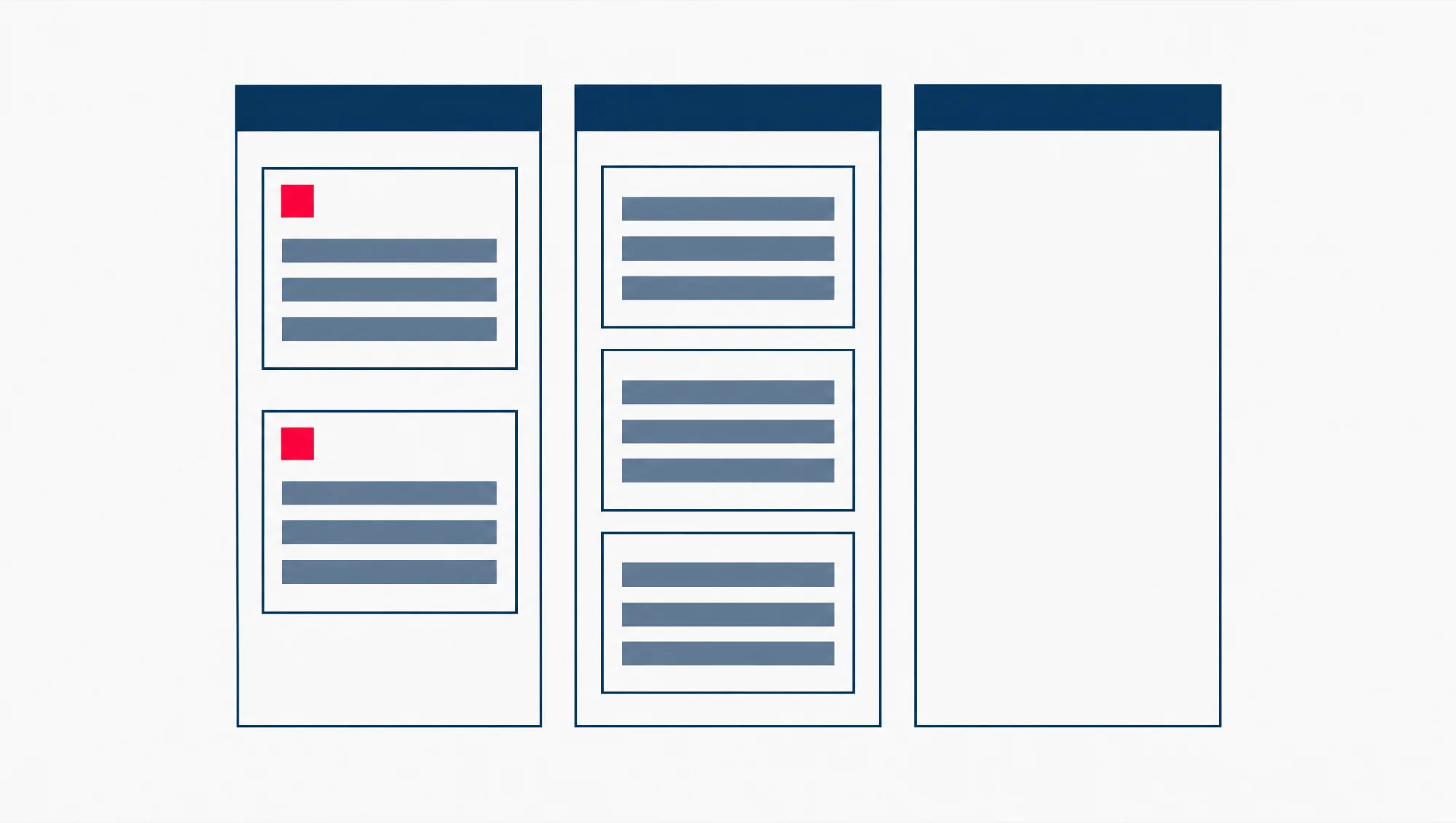
Google’s SEO documentation is not one document. It is a site, called Google Search Central, and it holds several separate documents that do very different jobs. Knowing which document a recommendation came from is the difference between a proposal you can check and one you have to trust.
Three of those documents matter to a small business, and they split three ways:
- The rules. Google Search Essentials, which holds the technical requirements and the spam policies. Breaking these has a stated consequence.
- The advice. The SEO Starter Guide and the pages around it. Worth following, and nothing happens to you if you do not.
- The silence. Google publishes no list of ranking factors, no weights, and no timeline. Knowing that gap is there changes how you read every confident number you are shown.
If somebody has handed you a list of SEO recommendations, that three-way split is the whole tool. Every item on the list sits in one of those buckets, and you can work out which one in a few minutes without asking the person who wrote the list.
The rest of this page is the map. Which document covers what, where each one lives, and how to tell a rule from an opinion.
We opened every Google page in the table below on 22 September 2026.
Where Google keeps its SEO documentation
It is at developers.google.com/search, under the name Google Search Central. If you have read older SEO writing you will have seen it called Google Webmasters, and the main rules page still carries its old name in the title: “Google Search Essentials (formerly Webmaster Guidelines)”. Same thing, renamed.
The word “developers” in that address puts people off, and it should not. The two documents a business owner needs are written for a general reader, not for a programmer.
Everything below hangs off two items in that left-hand menu: Search Essentials, and SEO fundamentals. Open those two and you have seen the part of the site that any SEO recommendation is about.
Here is the set worth knowing, with what each one is for and whether it binds you.
| Document | What it covers | Rule or advice | Last updated |
|---|---|---|---|
| Technical requirements | The three things a page needs before Google will index it at all: Googlebot is not blocked, the page returns a success code, and it has indexable content. | Rule. Fail one and the page is not eligible. | 2025-12-18 |
| Spam policies | The behaviours and tactics that get a page or a whole site ranked lower or dropped from results. | Rule. Breaking these can bring a penalty applied after a person at Google reviews the site. | 2026-08-28 |
| Google Search Essentials | The parent page holding the two above plus a short list of key best practices. | Both. Read it to see where Google itself draws the line. | 2025-12-10 |
| SEO Starter Guide | Google’s own walk-through of “the most common and effective improvements you can do on your site”, including organising it, title links and snippets. | Advice. This is the document most people mean by “Google’s SEO guide”. | 2025-12-10 |
| General structured data guidelines | What the code behind rich results, the extras on a listing such as review stars, must do to qualify. | Rule, for that feature only. It does not touch ordinary ranking. | 2026-07-10 |
| Do You Need an SEO? | What to ask before hiring anyone, and which promises mean you should walk away. | Advice, written for the person doing the hiring rather than the person doing the work. | 2026-06-05 |
That table is the artefact worth keeping. Six documents, not a library.
What is the difference between Google Search Essentials and the SEO Starter Guide?
They answer two different questions, and a recommendation that treats them as one document is already off to a bad start.
Search Essentials is the floor. Google’s own wording: the Search Essentials “make up the core parts of what makes your web-based content (web pages, images, videos, or other publicly-available material that Google finds on the web) eligible to appear and perform well on Google Search”. The word doing the work there is “eligible”. Meeting the floor earns you nothing. It only keeps you in the building.
The SEO Starter Guide is what you do after that. Google puts the two in order itself: “SEO is about taking the next step and working on improving your site’s presence in Search.” The Starter Guide is the practical list of those next steps, and it is honest about its own limits in a way agency decks rarely are. Its own words: “There are no secrets here that’ll automatically rank your site first in Google (sorry!).”
Google is careful about what following either document buys you, and the care is the point. On the Starter Guide: “While there’s no guarantee that any particular site will be added to Google’s index, sites that follow the Search Essentials are more likely to show up in Google’s search results.” On Search Essentials: “just because a page meets all of these requirements and best practices, doesn’t mean that Google will crawl, index, or serve its content.”
More likely. Not guaranteed. If a proposal on your desk is more certain than Google is about Google, that certainty came from somewhere else.
The four words this page keeps using
- Indexed
- Stored in Google’s copy of the web. A page that is not indexed cannot appear in results at all, whatever else is done to it.
- Eligible
- Allowed to appear. It is permission to compete, not a position. Google uses this word instead of a promise, everywhere.
- Manual action
- A penalty applied after a person at Google has reviewed the site, as opposed to an automatic system. Google tells you to look for it in the Manual Actions report inside Google Search Console, which is its own free tool for site owners.
- Rich result
- An extra on a search listing beyond the title and the description. Google’s own examples are “review stars, carousels, and more”. It comes from code you add to the page, and it is a separate thing from ranking.
Which parts are rules I must follow, and which are only recommendations?
Google does not label its own pages “rule” and “advice”. You can still sort them reliably, because a rule is the thing with a stated consequence and advice is the thing without one.
The rules are short, and there are fewer of them than you would guess. The technical requirements come down to three items, in Google’s own words: “Googlebot isn’t blocked”, “The page works, meaning that Google receives an HTTP 200 (success) status code”, and “The page has indexable content”. Googlebot is Google’s crawler, the program that goes and reads your pages. If any of the three fails, the page is not eligible to be indexed, and everything else anybody does to it is wasted effort.
The spam policies are the other half of the rules, and they are the part with a person attached. Google states the mechanism plainly: “We detect policy-violating practices both through automated systems and, as needed, human review that can result in a manual action. Sites that violate our policies may rank lower in results or not appear in results at all.” That is a consequence, named, in Google’s own documentation. Nothing in the SEO Starter Guide has an equivalent. Our guide to telling a spam update from a manual action walks through how to check which one you have, report by report.
The advice is everything else, and it is genuinely worth doing. Google groups its own suggestions under the heading “Key best practices” and frames them as what “can have the most impact”, which is a long way from a requirement. Create helpful content, use the words people actually use, make your links crawlable, promote the site. If the second one is the part you are stuck on, our notes on finding seed keywords before you open a tool are one way through it. Ignore all of it and nothing is done to you. You simply compete against people who did it.
The silence is the third bucket, and it is the one nobody tells you exists. Google publishes no list of ranking factors, no weights for any signal, and no schedule. It does not say that any single change will move you, or by how much, or when.
So here is the sort, on any recommendation you have been given. Ask first whether ignoring it has a stated consequence. If a Google page says the page becomes ineligible, or that a manual action can follow, it is a rule. Then ask whether a Google page recommends it at all. If one does but attaches no consequence, it is advice, and you get to weigh it against the cost. If no Google page mentions it, it is somebody’s opinion. That does not make it wrong. Plenty of good SEO work sits there. It does mean the decision is yours and not Google’s, and anyone presenting it as Google’s requirement has overstated their hand.
One worked example: the star ratings on a search listing
Take one thing your web person may have offered you, and run it through the sort. Rich results are the extras on a listing beyond the title and the description, and Google’s own examples are “review stars, carousels, and more”. They come from structured data, which is a block of code on the page that describes what the page is about in a form a machine reads.
It is a rule, and Google says so in requirement language. The general structured data guidelines “must be followed in order to be eligible for appearance as a rich result in Google Search”, and on completeness: “Items that are missing required properties are not eligible for rich results.”
It carries a consequence, and Google names it. “If your page contains a structured data issue, it can result in a manual action. A structured data manual action means that a page loses eligibility for appearance as a rich result; it doesn’t affect how the page ranks in Google web search.”
And it promises nothing. Google’s own note on the same page: “Google does not guarantee that your structured data will show up in search results, even if your page is marked up correctly according to the Rich Results Test.” Or, more bluntly, “Using structured data enables a feature to be present, it does not guarantee that it will be present.”
Read those three together and you have the whole shape of this documentation in one document. A named requirement, a named penalty for breaking it, and no promise about the outcome. If somebody has quoted you for “schema markup to boost your rankings”, the first half of that sentence is a real and documented job and the second half is not what the document says it does.
Does Google publish its ranking factors?
No. There is no list, no weights, and no timetable, and the absence is deliberate rather than an oversight.
The closest thing to a ranking list in the documentation is the handful of items Google calls “Key best practices”, and it introduces them as things that “can have the most impact”. Can. Not will, and no number beside any of them. The Starter Guide is blunter still about what it is not: “There are no secrets here that’ll automatically rank your site first in Google (sorry!).”
On timing, Google gives a range instead of a schedule: “Some changes might take effect in a few hours, others could take several months.” Its own suggestion is to “wait a few weeks to assess whether your work had beneficial effects”. So anyone promising you a position by a date is promising something Google declines to promise about its own system.
That silence is the room the ranking-factor genre grew in. The lists you have seen, counting the factors and ranking them by weight, are reconstructions built from patents, public statements and people’s own testing. Some of that work is careful. None of it is a Google document, and the honest way to hold any of it is as informed guesswork.
What Google does publish is the opposite list. The Starter Guide has a section headed “Things we believe you shouldn’t focus on”, and four entries in it are worth reading before you approve a quote:
- The keywords meta tag. “Google Search doesn’t use the keywords meta tag.”
- PageRank as the whole story. “We have many ranking signals, and PageRank is just one of those.”
- A duplicate content penalty. On the same content sitting at more than one address: “It’s inefficient, but it’s not something that will cause a manual action.” Copying somebody else’s content is a separate matter, and Google says so.
- E-E-A-T as a ranking factor. Google’s entire answer, verbatim: “No, it’s not.”
If a proposal is built on any of those four, the document that contradicts it is one click away and free to read.
What about the 2024 Google documentation leak?
You may have been told that Google’s real documentation leaked, and that we now know what it actually measures. Here is what can be said about it without stretching anything.
Internal Google Search documentation was published by accident in March 2024 and became public knowledge in May 2024. It ran to over 2,500 pages describing more than 14,000 attributes connected to Google’s ranking systems, and Google confirmed the documents were genuine on 29 May 2024. Part of why it drew attention was that some of its contents appeared to contradict things Google representatives had said publicly about how the search algorithm works.
So it is real, and it is interesting. It is also not guidance, and that distinction is the only one that matters for checking a claim. It was never written for site owners, Google has not adopted it, maintained it or explained it, and nothing in it tells you what to do. Attribute names in an internal system are not instructions, and an attribute existing does not tell you whether it is used, how much, or still.
This page names the leak because you will meet it, and then leaves it there. Nothing in this piece rests on it, and no figure or ranking claim from it appears anywhere above. If somebody quotes the leak at you as the reason to buy something, they have moved from documentation you can both read to an interpretation only they can vouch for.
The map changes, so check the date on it
Documentation that is worth citing is documentation that is maintained, and Google’s is. Two changes worth knowing about, because both catch out advice written a couple of years ago.
The disavow links tool is not a routine step, and Google now says so first. Google’s page is called “Disavow links to your site”, and disavowing means naming the pages or domains that link to you which you want Google to disregard. If it has ever been put to you as ordinary housekeeping, Google’s own page opens with the opposite: “In most cases, Google can assess which links to trust without additional guidance, so most sites will not need to use this tool.” It then sets two conditions, both of which must hold: “You have a considerable number of spammy, artificial, or low-quality links pointing to your site, AND The links have caused a manual action, or likely will cause a manual action, on your site.” Google also warns that the feature “can potentially harm your site’s performance in Google Search results” if used incorrectly. For most small business sites in Singapore, that is a job that does not need doing and a line item worth questioning.
The spam policies gained a new entry on 13 April 2026. Google announced on its Search Central blog that “back button hijacking”, where a site interferes with the browser’s back button so a visitor cannot return to where they came from, “will become an explicit violation of the ‘malicious practices’ of spam policies, leading to potential spam actions”. It is a small change on its own. It matters here as evidence that the rules bucket is a living document with a date on it, not a fixed text somebody memorised once.
Which is why the habit worth forming is not learning the rules. It is opening the page and reading the date.
Can I just follow Google’s guide myself instead of hiring somebody?
For a lot of Singapore small businesses, yes, at least to begin with. That is not our opinion. It is Google’s, in a document called Do You Need an SEO?, which is the page on Search Central written for the person doing the hiring rather than the person doing the work.
Google’s wording: “If you run a small local business, you can probably do much of the work yourself. We recommend starting with the SEO starter guide, as it’s a practical guide to improving your site’s SEO and it describes much of what your SEO will do for you.”
The same page is where Google tells you how to interview the person you might hire instead. These are its questions and its instructions, not ours:
- On guarantees. “If they guarantee you that their changes will give you first place in search results, find someone else.”
- On evidence. “Do they cite official Google documentation as supporting evidence for their recommendations?”
- On tools. “Google doesn’t evaluate or endorse third-party SEO tools, and these tools don’t have access to Google’s internal ranking data.” Google adds: “Be wary of tools that claim to be ‘acceptable’ or ‘approved’ by Google Search.” If you want to know what the common tools do and do not see, our notes on the SEO tools Singapore SMBs use go through them.
- On access. If you are asked for an audit, “only grant read access to Search Console (at this stage, don’t grant them write access)”.
- On what an audit is. It “should be about giving you realistic estimates of improvement, and an estimate of the work involved”.
- On cold approaches. “Be wary of SEO firms and web consultants or agencies that email you out of the blue.”
We are a web studio in Singapore, so the second question on that list is one you could fairly put to us. Ask it. A recommendation that cannot name the Google page behind it is a judgement call, and it should be presented to you as one.
Questions people ask
Where do I start if I have never opened any of this?
Two things, in this order. Read the SEO Starter Guide once, all the way through, without doing anything to your site yet. Then set up Google Search Console, which is free and shows you what Google actually sees on your site. After that, the recommendations people give you stop being abstract, because you can look up the report they are talking about.
Do I need Google Search Console for my site to appear in Google?
No. Google’s own answer: “You don’t have to sign up for Search Console to be included in Google Search results, but Search Console helps you understand and improve how Google sees your site.” It is a window, not a door. Anyone who tells you your site is invisible because Search Console is not set up has the relationship backwards. If you are looking at its reports beside Google Analytics and the two disagree, we set out which tool holds which number.
Someone quoted me for keyword-rich domain names and URLs. Is that a rule?
It is not even strong advice. The Starter Guide’s position: “From a ranking perspective, the keywords in the name of the domain (or URL path) alone have hardly any effect beyond appearing in breadcrumbs.” On the domain ending, it says the TLD “only matters if you’re targeting a specific country’s users, and even then it’s usually a low impact signal”. Pick a name your customers can say down a phone. That is the whole test.
Is this the same as Google’s algorithm documentation?
No, and the difference is the point of this page. Google documents what it wants from your site, and it documents what will get your site penalised. It does not document how the ranking works. Google does not publish how the ranking is calculated, which is exactly why “Google says” is a claim worth checking rather than a claim worth accepting.
If I follow all of it, will I rank?
Nobody can tell you that, and Google says as much in two places. Following the Search Essentials makes a site “more likely to show up in Google’s search results”, with “no guarantee that any particular site will be added to Google’s index”. Meeting all the requirements and best practices still “doesn’t mean that Google will crawl, index, or serve its content”. Following the documentation removes the reasons you would be excluded. What you do with the space that opens up is a separate job.
One check to run this week
Take the last SEO recommendation somebody gave you. One item, not the whole list. Then spend ten minutes on this.
- Write the recommendation down in one sentence, in your own words.
- Open developers.google.com/search and search the documentation for it.
- If a Google page says the thing is required, or that ignoring it can bring a penalty, it is a rule. Do it.
- If a Google page recommends it but attaches no consequence, it is advice. Weigh it against what it costs you.
- If no Google page mentions it at all, it is somebody’s judgement. Ask them whose, and on what evidence.
That third outcome is the common one, and it is not an accusation. Much of the useful work in this field lives there. The only thing that has changed is that you now know which kind of claim you are holding, and you can ask the question in Google’s own words: does this recommendation cite official Google documentation as supporting evidence?
The next thing worth reading is the page we keep coming back to, Do You Need an SEO?. It is Google’s own list of questions to put to anyone you are thinking of hiring, and it takes about five minutes. More of our field notes on websites, SEO and IT for Singapore businesses are in the Notes index.