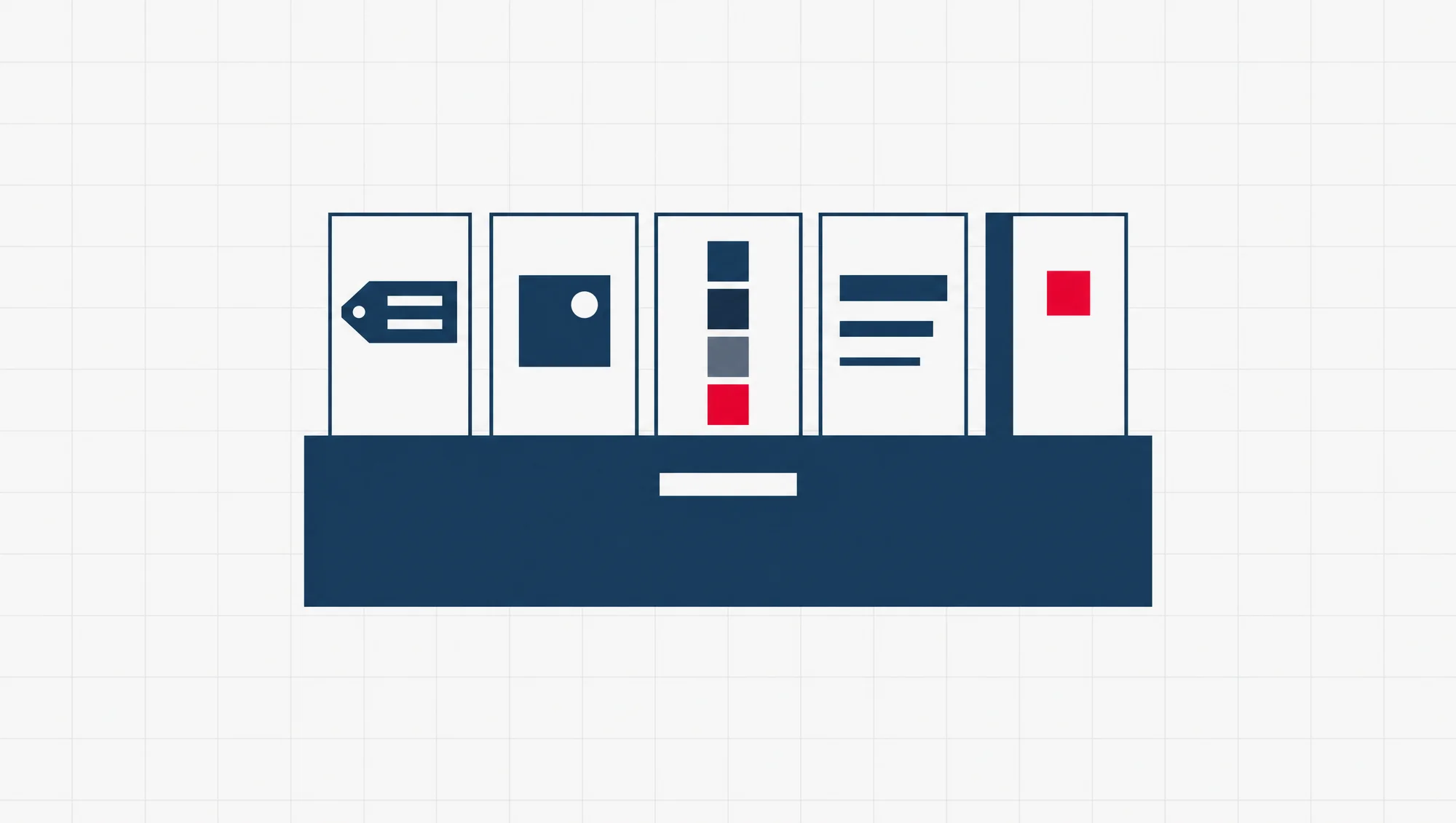
Singapore branding has no standard price. A quote depends on how much of the brand identity it covers. A brand identity is everything people see and hear that tells them a business is yours. It has five parts you can check: the name, the logo, the colours and typefaces, the voice (how the business writes and speaks), and the brand guidelines, a short file that sets out how to use the other four.
The one fixed, public cost is the fee for a trade mark, a registered name or logo that only your business may use for its goods or services. IPOS, the Intellectual Property Office of Singapore, charged S$280 for each class on 8 October 2026, when the descriptions came from its ready-made list. A class is one group of goods or services that the mark covers.
Two facts matter more than the price, so check them before you pay anyone.
Your company name is not protected by registering it. ACRA, the Accounting and Corporate Regulatory Authority that keeps Singapore’s register of businesses, says registering a business name “is not the same as registering a trade mark”. ACRA says a trade mark, registered with IPOS, is what gives you exclusive rights to the name.
Paying for a logo does not make you its owner. Under Singapore’s copyright law, the Copyright Act 2021, the person who makes a work is, by default, its first owner. Copyright is the exclusive right to copy a work, publish it and share it with the public. To move it to you, the Act needs an assignment, a transfer of the copyright, that is in writing and signed by the person giving it up.
We build and host business websites. We do not sell branding, so nothing on this page sells you a package. It ends where your new brand identity meets the website that will carry it.
What should a branding package include?
A branding package should include all five parts of the brand identity, each as a file or a record you keep. A quote that names only “logo design” covers one of the five. Here is what each part is, and what you should have in your hands when it is done.
| Part | What it is | What you should hold at the end |
|---|---|---|
| The name | The business name, and any product names. | A name you have searched at ACRA and IPOS, with the matching .sg domain (a web address ending in .sg) checked. |
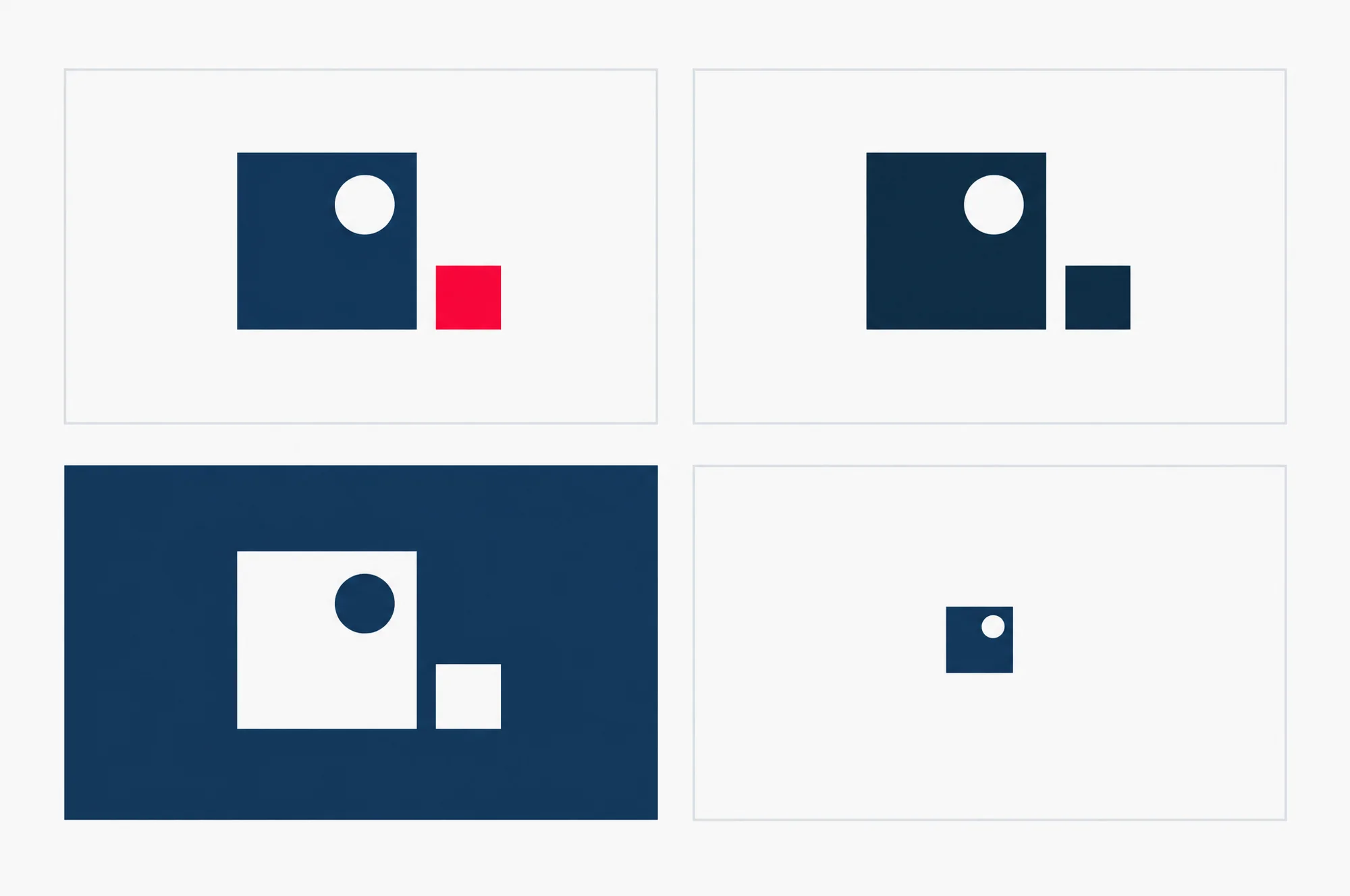
| The logo | The mark people see on your sign, your website and your invoices. | The master file in a vector format (drawn as lines and shapes, so it stays sharp at any size), plus full-colour, one-colour and reversed (light on dark) versions, and a small version for a browser tab. |
| Colours and typefaces | The few colours and fonts that make your material look like it comes from one business. | The exact colour codes for screens and for print, and the names of the fonts, with their licences (the terms that let you use them). |
| The voice | How the business writes and speaks: the words it uses, and the words it avoids. | A page or two of rules and sample lines that anyone writing for you can follow. |
| Brand guidelines | The file that holds the other four and says how to use them. | One document, usually a PDF: logo spacing and smallest size, colour codes, fonts, voice rules and examples. |
The vector master matters most. A vector file is a logo drawn as lines and shapes, not as dots, so it can be printed on a business card or a shop sign and stay sharp at every size. An image file made of dots blurs when you make it bigger.
Ask for the colours as codes, not just as a picture of them. Your website and your printer each need the numbers. If you are still choosing the colours, our guide on how to choose a colour scheme for your website helps you pick ones that work on screen.
If a quote includes a strategy stage, ask what it produces on paper. Strategy is the research that decides what the brand identity should say and to whom. Done well, it ends in a short written document. If it ends in a meeting and nothing written, you have nothing to hand the next designer.
Do not let the brand guidelines file drop out of a quote to save money. It is the part your web designer, your printer and your next hire will each need. Without it, every one of them guesses, and the brand identity drifts a little with each guess.
If you only need the version a website uses, our article on brand guidelines for your website shows the one page to fill in.
How do I check and register a trade mark in Singapore?
Check the name at IPOS before anyone draws a logo for it, then file the trade mark in your company’s name once the logo is final. The search is free. The filing is not.
The order matters because a business name touches three separate records, kept by three different bodies. Holding one gives you no claim on the other two.
Read the three records as words
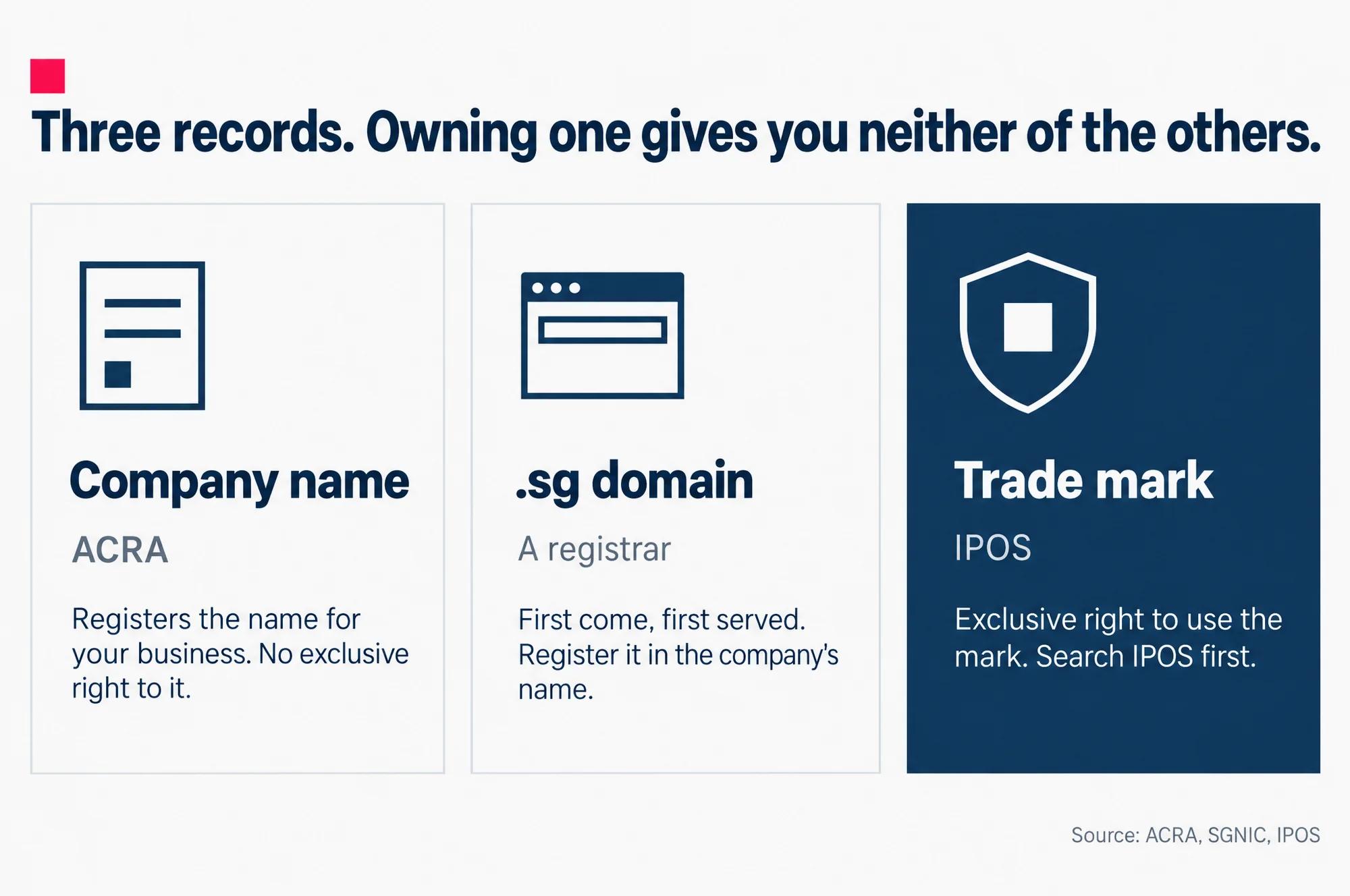
Three records. Owning one gives you neither of the others.
- Company name (ACRA): Registers the name for your business. No exclusive right to it.
- .sg domain (a registrar): First come, first served. Register it in the company’s name.
- Trade mark (IPOS): Exclusive right to use the mark. Search IPOS first.
Source: ACRA, SGNIC, IPOS
The company name sits with ACRA. ACRA says business name registration “does not give you exclusive rights to the name”. It only registers the name for your business entity.
The .sg domain sits with a registrar. ACRA also says a registered business name “does not give you the right to a matching website address”, and that website addresses go “on a first-come, first-served basis”. A registrar is a company accredited to sell domain names. SGNIC, the body that runs every .sg address, says a .com.sg address needs your business certificate numbers and company registration documents.
The trade mark sits with IPOS. ACRA says a trade mark “gives you exclusive rights to use the name” and “prevents others from using your registered mark”. To get it, you apply to IPOS separately.
So a name can be free at ACRA and still be someone else’s registered trade mark. That is why the IPOS search comes first. Here is the order we would follow:
- Search IPOS for similar marks. IPOS runs a free check called TM Similar Mark Search on IPOS Digital Hub, its online service. You can type the words of your name, enter Chinese characters, or upload an image of a logo. Then you pick the classes to search. A class is one of the groups of goods and services that IPOS registers a mark under.
- Apply for the company name. You do this on Bizfile, ACRA’s online service. If the name is approved, keep the transaction number. ACRA gives you 120 days to register the business, and after that the name is released for others to use.
- Check the .sg domain. Look up the address you want with any accredited registrar. If it is free, register it in the company’s name, not a staff member’s. Our guide to .sg domains and hosting for Singapore businesses says who can register which ending.
- Search again with the finished logo. Once the logo is drawn, upload it to the same IPOS search. A new mark can still look like an old one.
- File the trade mark. You file Form TM4, the IPOS trade mark application, on IPOS Digital Hub and pay the fee for each class. To log in, you need Singpass, the government login for a person, or Corppass, the login for a company. You also need a Singapore address for dealing with IPOS. If you have none of these, IPOS says an agent can file on your behalf.
Put the company down as the applicant, not a director and not the designer. The trade mark is part of what the business owns. If it sits in one person’s name and that person leaves, the trade mark goes with them on paper.
Do I own the copyright in my logo after I pay the designer?
Not by paying alone. You own it when the person who holds the copyright transfers it to you in a signed document.
Here is what the Copyright Act 2021 says, in three steps.
The maker owns it first. Section 133 makes the author, the person who made the work, the first owner of copyright in an authorial work. Authorial works are a group in the Act, and artistic works are one kind in that group. So if a freelancer draws your logo and it has copyright as an artistic work, the freelancer owns that copyright first.
An employer owns its staff’s work. Section 134 says that when an employee makes a work in the course of their job, the employer is the first owner, subject to an exception set out in the same section. So when a designer on an agency’s staff draws your logo, the first owner under that rule is the agency, not the designer and not you.
A transfer must be written and signed. Section 138 says an assignment of copyright “is valid only if it is” made in writing and signed by or on behalf of the person giving it up. Section 133 also lets a written agreement, made on or after 21 November 2021, set a different first owner.
What that means for you: a paid invoice and a folder of files are not a transfer. Ask for a short copyright assignment, signed by the freelancer or by the agency, that names the logo and the other brand artwork. Keep it with your company records.
This is a plain reading of the Act, not legal advice. If the designer’s contract is long, or the logo matters a great deal to the business, have a lawyer read it before you sign.
Should I hire a branding agency or a freelance designer?
Pick by how many of the five parts you need done, and who will look after them later. A branding agency is a company with a team, so it can take on all five parts at once. A freelance designer is one person, which suits a job that is mostly a logo and its files. A do-it-yourself tool, such as an online logo maker or a design app, puts the work on you.
Any of the three can work. What protects you is asking the right questions before you pay.
| A branding agency | A freelance designer | A do-it-yourself tool | |
|---|---|---|---|
| Who does the work | A team. Ask who will actually draw your logo, and whether they are on the agency’s staff. | One person. Ask whether anyone else will work on it. | You, inside the tool’s own rules. |
| The name | Ask whether naming is in the quote, and whether they run the IPOS search or leave it to you. | Ask whether naming is part of the job. If it is not, plan to do the IPOS search yourself. | You choose the name and do every search. |
| Who owns the copyright | The agency, if its staff drew it. Ask for a signed assignment from the agency. | The freelancer. Ask for a signed assignment from them. | Read the tool’s terms. Some do not let you register a logo made from their templates. |
| The files | Ask for the list of files in writing before you start. | Ask for the vector master, not only image files. | Check whether the tool exports a vector file at all. |
| The guidelines file | Ask whether it is included, and how many pages. | Ask whether it is in the quote at all. | You write it yourself. |
On the last column, one example. Canva, an online design app, says its logo templates “can be used by anyone”, so your rights to a template logo are not exclusive and “you can’t register it as a trademark”. It says a logo you design from scratch in Canva, from simple lines, shapes and its fonts, is different. Our Adobe vs Canva comparison for small teams also covers who owns a logo made in each tool.
Whoever you pick, ask the same two things in writing before any design starts: which files you will receive, and who will sign the copyright assignment. If a designer will not put both in writing before the work begins, take that as your answer.
How much does branding cost in Singapore?
There is no standard price, and we do not publish one, because we do not sell branding. A quote moves with how much of the work it covers. Only one cost on the list is fixed and public: the IPOS fee for the trade mark.
These are the things that move a branding quote up or down. Ask each designer to price them line by line:
- How many of the five parts are in it. A logo alone and a full set with naming, voice and guidelines are different jobs.
- Whether there is a strategy or naming stage. Research and naming take time before any drawing starts.
- How many first ideas, and how many rounds of changes. Each round is more of the designer’s time.
- The file list and the guidelines file. A vector master, every version and a guidelines PDF take more work than one image file.
- The copyright assignment. Ask whether it is in the price, or charged as an extra.
Then compare quotes part by part. Two quotes with the same total can cover very different work, and the cheaper one may leave out the files you need.
The IPOS fee is the fixed cost. On 8 October 2026, IPOS charged S$280 for each class to file Form TM4 when every description of your goods or services came from its Classification Database, its list of descriptions it has already approved. It charged S$410 for each class when you wrote your own. IPOS strongly encourages using the database, to avoid objections to the application and to cut the processing time.
So at those fees, a business that files in two classes, using the database wording, pays S$560 to IPOS. That is before any agent’s fee, if you use one.
Can a government grant pay for branding in Singapore?
Do not count on one until Enterprise Singapore, the government agency that runs business grants, has approved your project.
If a quote still offers to claim an EDG grant for you, ask which EDGE activity they mean. Enterprise Singapore sorts EDGE support into seven business areas: Automation & Digitalisation, Business Strategy, Financial Management, Innovation, Internationalisation, Standards and Sustainability. Branding is not one of them by name.
Two more EDGE rules matter before you sign. “Support levels differ by activity”, Enterprise Singapore says, with up to 70% at most for SMEs (small and medium-sized enterprises). And the grant is paid back afterwards: you can claim only “once the activity is completed and full payment has been made”. So you pay the designer in full first, and the grant, if it is approved, comes later.
Enterprise Singapore offers a call with its own advisor. If a grant would decide whether you go ahead, ask them about your project before you sign a quote that counts on one.
What should I own when the branding work is finished?
When the last invoice is paid, check that the business holds each of these. If one is missing, ask for it now. It is far easier to get while the designer still has the job open.
- The logo master files. The vector master, and the full-colour, one-colour, reversed and small versions, in a folder the company controls.
- A signed copyright assignment. From the freelancer, or from the agency, naming the logo and the other brand artwork.
- A trade mark filed in the company’s name. With the IPOS application number, and the classes you filed in.
- The .sg domain in the company’s name. Not a staff member’s, and not the designer’s.
- The brand guidelines file. With the colour codes, the font names and their licences, and the voice rules.
Store all five where more than one person in the business can reach them. If only one person knows where the logo files are, the business does not really hold them.
Where your new brand identity meets your website
A new brand identity has to work on your website too: on a phone screen, in a browser tab and in search results. That part is our work. We do not design brand identities. We build and host the websites that carry them, through our web design service. If you have not hired a web designer before, our guide to what to expect when you work with a web designer covers the brief, the budget and the contract.
If you are changing your brand identity, or about to, book a short call with us. We go through what the new brand identity means for your website: which pages change, and which files we would need from your designer, usually the vector logo, the small version for the browser tab, the colour codes and the guidelines file. If your current site can simply take the new look, we will say so.